
01
1. Why Start a Food Processing Business?
Food processing converts agricultural produce and raw ingredients into convenient, shelf-stable, ready-to-cook, or ready-to-eat products. Entrepreneurs can start with local sales and gradually expand through retail stores, online marketplaces, distributors, hotels, restaurants, institutional buyers, and exports. Demand exists across daily-use products such as spices, sauces, snacks, juices, pickles, pastes, dehydrated foods, bakery products, and frozen foods.
02
2. How to Choose the Right Food Business Idea
Choose a product based on local raw-material availability, shelf life, target customer, competition, investment capacity, production skills, storage needs, packaging cost, and sales channel. A good business idea should solve a clear customer need and allow consistent production. Do not select machinery before finalizing the product, recipe, market, and expected daily capacity.
03
3. Tomato Ketchup and Sauce Manufacturing
Tomato ketchup and sauce are consumed by restaurants, cafés, cloud kitchens, caterers, street-food businesses, hotels, and households. A production setup may include tomato washing, sorting, crushing, pulping, cooking, mixing, homogenizing, storage, filling, and capping. Entrepreneurs can explore a tomato ketchup processing plant based on required capacity and automation.
04
4. Mayonnaise Manufacturing
Mayonnaise is widely used in burgers, sandwiches, wraps, salads, dips, and fast-food products. The business can target restaurants, cloud kitchens, caterers, retail consumers, and private-label brands. Production requires controlled mixing and stable emulsification. A mayonnaise making plant may include mixing tanks, emulsification equipment, transfer systems, storage, and filling.
05
5. Pickle Manufacturing
Pickle manufacturing is suitable for home businesses, women entrepreneurs, farmer groups, local brands, restaurants, and small food companies. Popular products include mango, lemon, chilli, mixed vegetable, garlic, ginger, and regional pickles. Machinery may include washing, cutting, mixing, oil preparation, filling, and sealing equipment. Strong recipes, hygiene, packaging, and consistent taste are essential.
06
6. Ginger-Garlic Paste Business
Ginger-garlic paste has regular demand from homes, restaurants, hotels, caterers, cloud kitchens, and institutional kitchens. The process generally includes washing, peeling, trimming, grinding, mixing, preservation, filling, and refrigeration or shelf-life management. Product quality depends on raw material freshness, hygienic processing, texture, recipe, and suitable packaging.
07
7. Fruit Juice Manufacturing
Fruit juice businesses can produce mango, orange, pineapple, guava, apple, mixed fruit, pomegranate, and regional beverages. A production line may include washing, sorting, crushing, pulping or extraction, filtration, blending, pasteurization, storage, filling, and sealing. Explore fruit juice processing plant solutions for commercial production.
08
8. Fruit Pulp and Puree Production
Fruit pulp is used by beverage companies, bakeries, ice-cream manufacturers, dairy businesses, hotels, restaurants, exporters, and food factories. Mango, guava, tomato, papaya, strawberry, and other fruits can be processed into pulp or puree. The plant may include washing, sorting, destoning, pulping, refining, heating, storage, and aseptic or conventional packaging.
09
9. Spice Powder Manufacturing
Spice powder is a popular business because products such as turmeric, chilli, coriander, cumin, garam masala, and regional blends have regular household and commercial demand. The setup may include cleaning, drying, grinding, sieving, blending, and packaging. Product purity, aroma, moisture control, consistent particle size, and attractive packaging are critical.
10
10. Dehydrated Fruit and Vegetable Business
Dehydration extends shelf life and reduces storage weight. Products may include dehydrated onion, garlic, tomato, ginger, chilli, herbs, banana, mango, apple, and vegetable flakes or powders. Customers include snack companies, seasoning manufacturers, instant-food brands, restaurants, exporters, and online consumers. The process may involve washing, cutting, blanching, drying, grading, and moisture-proof packaging.
11
11. Potato Chips and Banana Chips Manufacturing
Chips are suitable for local retail, online sales, cafés, canteens, schools, offices, and regional distribution. Machinery may include washing, peeling, slicing, blanching, frying, de-oiling, seasoning, and packaging. Success depends on oil management, consistent thickness, crispness, flavour, packaging, and distribution.
12
12. Frozen French Fries Business
Frozen French fries are consumed by restaurants, hotels, cafés, quick-service restaurants, caterers, and cloud kitchens. Production requires potato grading, washing, peeling, cutting, blanching, drying, frying or pre-frying, freezing, and cold storage. This business generally requires greater investment because temperature-controlled processing and distribution are important.
13
13. Ready-to-Cook Vegetable Business
Washed, peeled, and cut vegetables can be supplied to restaurants, hotels, cloud kitchens, caterers, hostels, hospitals, and busy households. Products may include diced onions, sliced carrots, peeled potatoes, mixed vegetables, chopped cabbage, and ready-to-cook meal kits. A hygienic washing and cutting setup can reduce manual labour and improve consistency.
14
14. Commercial Vegetable Cutting Service
Entrepreneurs can provide bulk vegetable cutting services to restaurants, caterers, banquet halls, canteens, hostels, hospitals, and community kitchens. A commercial vegetable processing machine can produce slices, cubes, shreds, julienne cuts, and chopped leafy vegetables depending on the selected model and blade.
15
15. Fruit and Vegetable Washing Service
Packhouses, farms, vegetable suppliers, supermarkets, food processors, restaurants, and fresh-cut businesses require cleaner produce. A washing service or packaged-clean-produce business may use bubble washers, batch washers, spray washers, brush washers, and sorting conveyors. Water quality, sanitization, drainage, and handling practices are important.
16
16. Onion and Garlic Peeling Business
Peeled onion and garlic can be supplied to restaurants, hotels, caterers, cloud kitchens, food factories, and institutional kitchens. The business reduces labour for buyers and provides recurring supply opportunities. Machinery selection depends on raw-material size, moisture, expected peeling quality, daily output, and whether the product will be sold whole, chopped, or converted into paste.
17
17. Jam, Jelly, and Fruit Spread Manufacturing
Jam and fruit spreads can be produced from mango, strawberry, pineapple, mixed fruit, guava, and seasonal produce. The process may include fruit preparation, pulping, cooking, sugar blending, concentration, hot filling, capping, and cooling. Small brands can differentiate through regional fruits, lower-sugar recipes, premium packaging, and direct-to-consumer sales.
18
18. Chutney and Dip Manufacturing
Chutneys and dips are popular with snacks, meals, sandwiches, and restaurant menus. Products may include mint chutney, tamarind chutney, garlic chutney, chilli dip, salsa, cheese dip, and regional recipes. Commercial production requires controlled grinding, mixing, cooking where required, hygienic filling, cold-chain planning, and shelf-life testing.
19
19. Nut Butter Manufacturing
Peanut butter, almond butter, cashew butter, and seed spreads are sold through fitness stores, supermarkets, online channels, cafés, bakeries, and private labels. Production may involve roasting, cooling, peeling, grinding, blending, and filling. Entrepreneurs can differentiate through flavours, texture, protein positioning, natural ingredients, and premium packaging.
20
20. Bakery and Premix Manufacturing
Bakery premixes, cake mixes, pancake mixes, instant dessert mixes, and savoury mixes offer convenience to homes, bakeries, cafés, restaurants, and institutional kitchens. Production requires ingredient handling, accurate weighing, sieving, blending, and moisture-resistant packaging. Recipe consistency and labelling are important.
21
21. Instant Gravy and Curry Base Business
Ready gravy bases can reduce preparation time for restaurants, cloud kitchens, caterers, hostels, and households. Products may include tomato-onion gravy, makhani base, white gravy, biryani base, and regional curry bases. Manufacturing can involve washing, cutting, grinding, cooking, mixing, homogenizing, cooling, and packaging.
22
22. Millet and Healthy Snack Business
Millet-based snacks, breakfast mixes, flour blends, roasted products, and ready-to-cook foods appeal to health-focused customers. Raw materials may include ragi, jowar, bajra, foxtail millet, and multigrain blends. Product development, texture, flavour, nutritional labelling, and packaging strongly influence sales.
23
23. Turmeric Processing and Powder Business
Farmers and agro entrepreneurs can add value by processing turmeric into cleaned, dried, polished, ground, and packaged powder. Equipment may include washing, boiling or curing systems, dryers, polishers, grinders, sieves, and packaging machines. Product colour, curcumin content, moisture, purity, and traceability can help create a premium brand.
24
24. Tomato Puree and Cooking Base Business
Tomato puree and cooking bases are used by households, restaurants, caterers, hotels, sauce manufacturers, and ready-food companies. Processing generally includes washing, crushing, pulping, heating, concentration, and packaging. Seasonal tomato availability and price fluctuations should be considered when planning raw-material procurement.
25
25. Tutti Frutti Manufacturing
Tutti frutti is used by bakeries, ice-cream makers, sweet shops, cafés, confectionery companies, and home bakers. It is commonly produced from raw papaya through peeling, cutting, blanching, sugar processing, colouring, drying, and packaging. Uniform cutting and controlled sugar absorption help maintain product quality.
26
26. Canned Fruit and Vegetable Business
Canning can preserve fruits, vegetables, beans, sauces, and prepared foods for longer periods. The business requires process control, container preparation, filling, exhausting, sealing, retorting or sterilization, cooling, and quality checks. Food safety expertise and validated thermal processing are essential.
27
27. Sauce and Condiment Private-Label Manufacturing
Entrepreneurs can manufacture sauces, mayonnaise, dips, chutneys, and condiments for restaurants, retailers, influencers, and other brands. Private-label production can improve equipment utilization and generate recurring orders. Clear recipes, confidentiality, minimum order quantities, packaging sourcing, and quality systems are important.
28
28. Food Processing Business Investment
Investment depends on product, capacity, automation, facility, utilities, licensing, raw material, packaging, working capital, and marketing. A home or micro setup may begin with basic equipment, while an automated plant may require substantial capital. Prepare separate budgets for machinery, electrical work, civil work, installation, packaging, laboratory testing, licences, staff, transport, and initial inventory.
29
29. Machines Required for a Food Startup
The exact machinery depends on the product. Common machines include washers, peelers, cutters, grinders, pulverizers, pulpers, mixers, kettles, homogenizers, dryers, fryers, filling machines, sealing machines, and packaging equipment. Start with essential production stages and add automation when sales become stable.
30
30. Licences and Compliance
Food businesses in India may need registrations and approvals based on product, scale, location, workforce, and business structure. These can include food-business registration or licensing, local business permissions, tax registration, factory-related approvals, pollution or fire permissions, legal metrology compliance, and product-specific labelling. Consult qualified professionals and official authorities before starting production.
31
31. Packaging and Branding
Packaging protects the product and communicates quality. Choose packaging according to shelf life, moisture, oxygen, light, transport, storage, and customer usage. The label should clearly present required product information. Strong branding, professional photography, useful pack sizes, and clear positioning can help a new product stand out.
32
32. Online and Offline Sales Channels
Food products can be sold through local stores, supermarkets, distributors, restaurants, hotels, exhibitions, social media, direct websites, online marketplaces, subscription models, and business-to-business supply. Start with one or two manageable channels and expand after achieving consistent quality and repeat purchases.
33
33. How to Estimate Profit
Profit should be calculated after raw materials, packaging, electricity, fuel, labour, transport, rent, commissions, wastage, returns, marketing, maintenance, taxes, and finance costs. High selling price does not automatically mean high profit. Test the product at a small scale, record actual costs, and calculate contribution per unit before expanding.
34
34. Common Mistakes New Entrepreneurs Make
Common mistakes include purchasing oversized machinery, underestimating working capital, ignoring packaging costs, launching too many products, assuming unrealistic shelf life, failing to standardize recipes, choosing equipment only by price, and starting production without confirmed sales channels. Begin with a focused product range and measurable demand.
35
35. How AREIUM Can Help
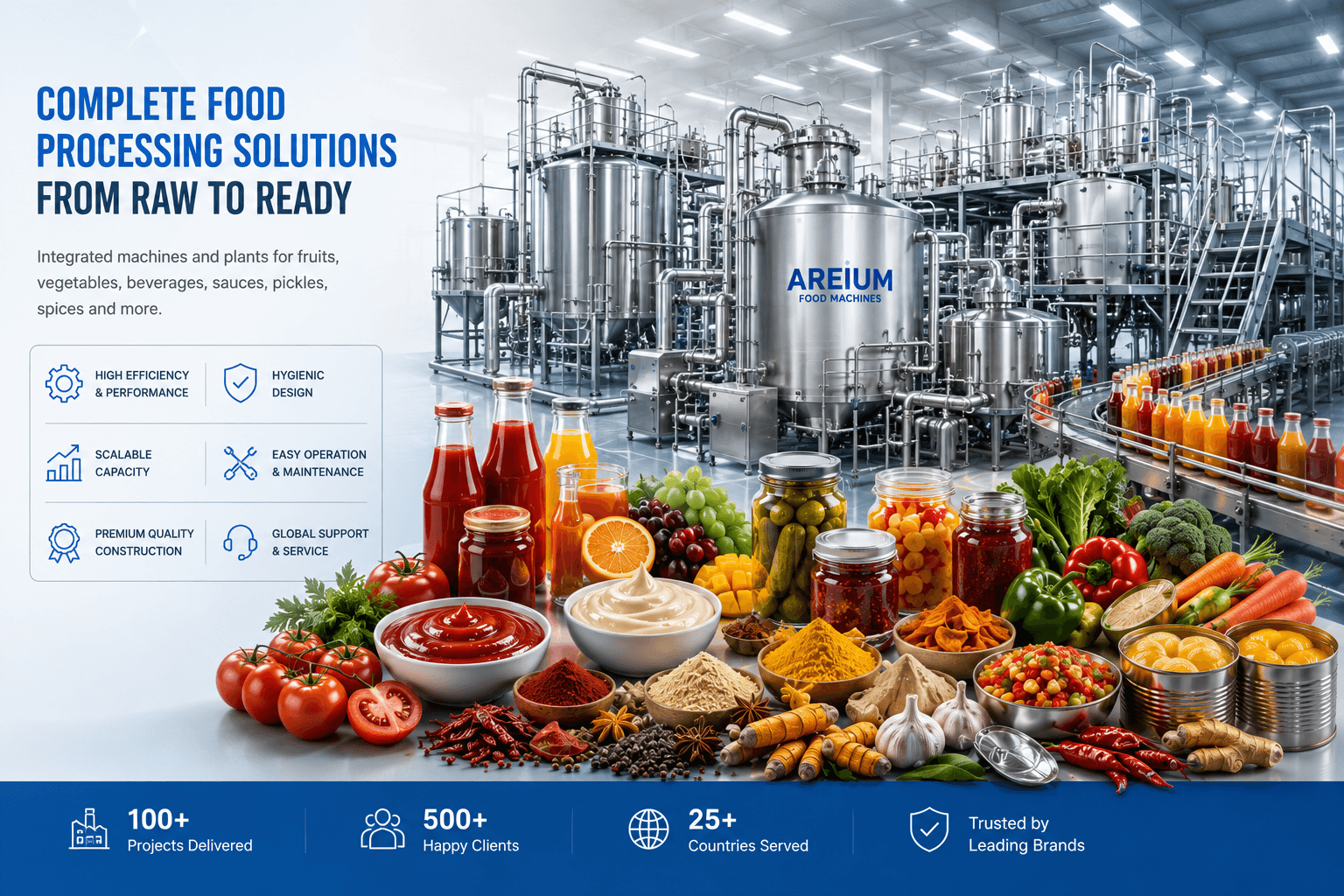
AREIUM Food Machines supports enquiries for individual food-processing machines and complete plants. Share your product, raw material, required capacity, business type, available space, utility details, budget range, and location. The team can help identify a suitable equipment configuration. Browse the AREIUM machine catalogue or submit your details through the contact page.
36
36. Final Conclusion
A profitable food processing business begins with a product that has real demand, consistent quality, manageable production costs, suitable packaging, and a dependable sales channel. Machinery can improve capacity and consistency, but it should be selected only after understanding the process and market. Start at a practical scale, collect customer feedback, improve the product, and expand gradually.