Complete Emulsion Processing Solution
Mayonnaise Making Plant Manufacturer in India
Automatic and semi-automatic mayonnaise production plants from 100 kg to 5 ton per hour
Areium Food Machines designs and manufactures mayonnaise making plants for startups, food entrepreneurs, cloud kitchens, private-label manufacturers and industrial food factories. The line can include ingredient preparation, oil dosing, aqueous-phase preparation, vacuum mixing, high-shear emulsification, homogenization, cooling, maturation, storage, filling, sealing and packaging.
100 kg to 5 TPH capacitiesEgg and eggless mayonnaise configurationsAutomatic and semi-automatic optionsFood-contact parts in SS304 or SS316High-shear and vacuum processing optionsJar, bottle, pouch and sachet packaging integration
Mayonnaise Plant at a Glance
About the Mayonnaise Making Plant
Starting a mayonnaise brand requires more than simply mixing oil and water. Stable emulsification, controlled ingredient addition, smooth texture, hygienic processing, repeatable viscosity and accurate filling are essential for commercial production. Areium Food Machines manufactures mayonnaise making plants for producing regular mayonnaise, eggless mayonnaise, flavoured mayonnaise, low-fat mayonnaise, sandwich spreads, salad dressings and compatible emulsified sauces. Each plant is configured according to the recipe, oil percentage, required batch size, viscosity, automation, packaging format, available utilities and factory space. Compact semi-automatic plants are available for startups, while PLC-controlled vacuum processing lines can be engineered for medium and large manufacturers.
Mayonnaise Making Plant Applications
Small-scale mayonnaise productionCommercial mayonnaise manufacturingEggless mayonnaise productionFlavoured mayonnaise productionLow-fat mayonnaise processingSandwich spread manufacturingSalad dressing productionDip and sauce manufacturingRestaurant and hotel mayonnaise productionInstitutional mayonnaise supplyPrivate-label mayonnaise manufacturingRetail jar and pouch productionFood-service sachet manufacturingBulk mayonnaise processingExport-oriented mayonnaise production
Technical Information
Mayonnaise Making Plant Specifications
Final specifications may vary according to capacity, automation, recipe, raw material and project requirements.
| Capacity | Minimum: 100 kg per batch • Maximum: 5 ton per hour • Customizable: Yes |
| Automatic Grade | Semi-automatic • Automatic • Fully automatic |
| Operation Mode | Batch • Inline • Hybrid |
| Material Of Construction | Product Contact Parts: Stainless Steel SS304, Stainless Steel SS316 where required • Non Contact Parts: Stainless Steel, Painted structural support where appropriate • Surface Finish: Food-compatible hygienic finish according to application |
| Processing Options | Atmospheric mixing • Vacuum emulsification • High-shear batch mixing • Inline homogenization |
| Heating Cooling Options | Electric heating • Steam heating • Hot-water heating • Chilled-water cooling • Cooling tower water • Custom temperature-control system |
| Suitable For Voltage | 220V single phase for selected compact machines • 380V or 415V three phase • 440V three phase • Customized for destination-country supply |
| Control Options | Manual control • Digital speed and temperature control • PLC control • HMI recipe control • Load-cell ingredient dosing • Variable-frequency-drive control • Data logging where specified |
| Multi Production Line Use | Yes |
| Cleaning Options | Manual cleaning • Semi-automatic CIP • Automatic CIP |
| End Products | Mayonnaise • Egg mayonnaise • Eggless mayonnaise • Flavoured mayonnaise • Low-fat mayonnaise • Vegan-style mayonnaise • Sandwich spread • Salad dressing • Garlic mayonnaise • Mint mayonnaise • Tandoori mayonnaise • Cheese-flavoured mayonnaise • Peri-peri mayonnaise • Institutional mayonnaise |
| End Packaging | Glass jars • PET jars • HDPE jars • Glass bottles • PET bottles • Stand-up pouches • Spouted pouches • Sachets • Food-service tubs • Buckets • Bag-in-box • Bulk containers |
| Utilities Required | Electrical power • Potable process water • Heating utility where required • Chilled water or cooling water where required • Compressed air for applicable automation • Drainage and sanitation facilities |
| Customization Available | Yes |
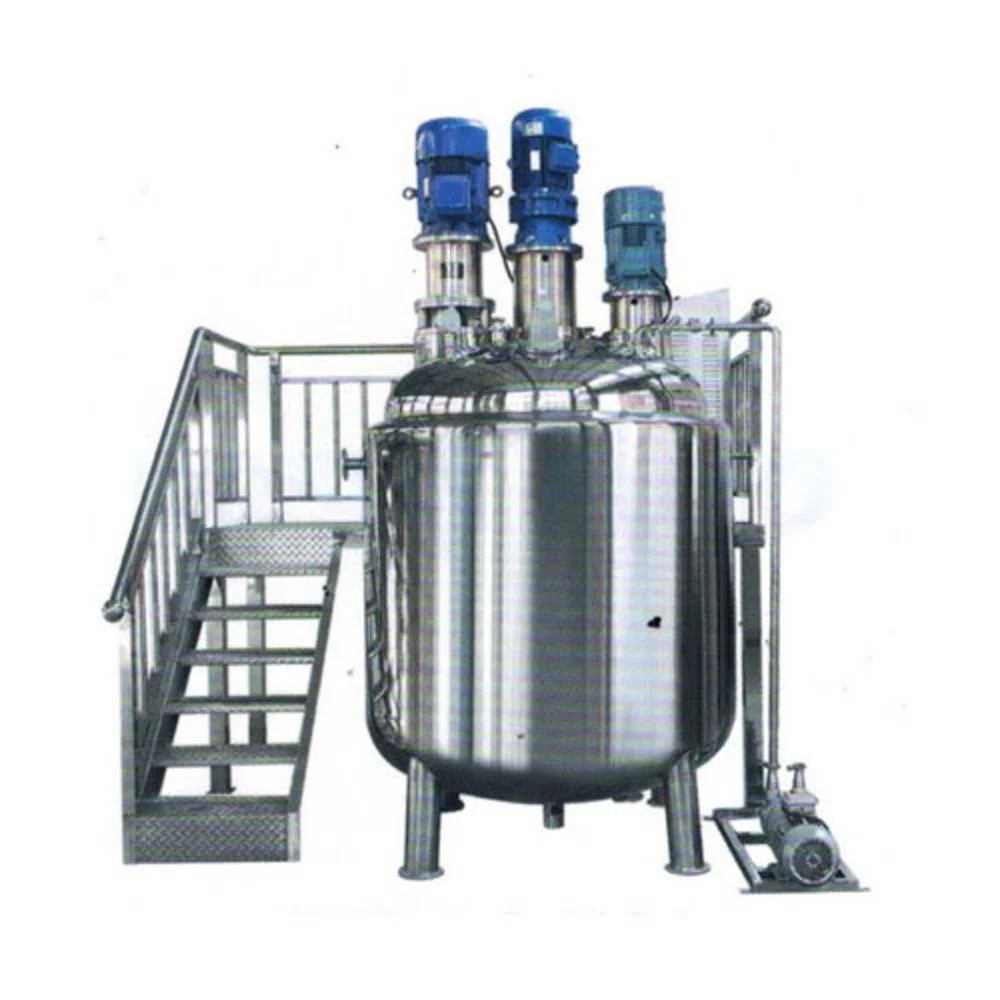
Areium Food MachinesCustom plant configurations available
Suitable Buyers
Who Is This Mayonnaise Plant Suitable For?
The plant can be configured for different investment levels, products and production volumes.
Food Startups
Compact semi-automatic plants for entrepreneurs launching mayonnaise, dips or sandwich-spread brands.
Small and Medium Manufacturers
Batch-processing systems suitable for supplying retailers, restaurants, distributors and institutional buyers.
Large Food Factories
Automatic vacuum processing lines with recipe controls, reduced handling and packaging integration.
Cloud Kitchens and Central Kitchens
Flexible systems for producing standardized mayonnaise and sauces for internal use or private-label supply.
Private-Label Manufacturers
Multi-product plants for manufacturing different mayonnaise recipes, flavours and pack sizes.
Export-Oriented Units
Custom plants for retail and bulk mayonnaise production according to project and destination requirements.
Processing Configuration
Machines Used in a Mayonnaise Making Plant
A modern mayonnaise production line combines hygienic ingredient preparation, controlled dosing, high-shear emulsification, texture control, cooling, storage and accurate filling. The exact equipment depends on the recipe, batch size and automation level.
Raw Material Preparation Unit
Ingredients such as edible oil, water, vinegar, egg or egg powder, starches, stabilizers, salt, sugar and seasonings are measured and prepared under hygienic conditions.
Accurate and repeatable ingredient preparationOil Storage and Dosing Tank
Stores edible oil and feeds it into the mixing vessel at a controlled rate. Load-cell, flow-meter or pump-based dosing can be provided according to the automation level.
Controlled oil addition during emulsificationOptionalAqueous Phase Preparation Tank
Used to prepare water, vinegar, salt, sugar, egg ingredients and approved additives before emulsification.
Uniform preparation of the water-based phasePowder Induction and Pre-Mixing System
Introduces starches, stabilizers, spices and other powders into the liquid phase while reducing lump formation and manual handling.
Efficient dispersion of dry ingredientsOptionalVacuum Mayonnaise Processing Vessel
Combines mixing, vacuum deaeration and emulsification in a closed vessel. Vacuum processing can reduce entrapped air and support a smoother, denser product where required.
Closed and controlled mayonnaise processingOptionalHigh-Shear Emulsifier
Creates a fine and stable oil-in-water emulsion by applying controlled high shear during oil addition. It is the core machine for achieving smooth texture and consistent viscosity.
Stable emulsification and smooth textureInline Homogenizer
Provides additional particle-size reduction and product uniformity for selected mayonnaise, dips and dressing formulations.
Texture refinement and consistency improvementOptionalScraped Surface or Anchor Agitator
Handles high-viscosity product and supports uniform mixing while reducing product buildup on vessel walls.
Mixing of thick mayonnaise and spreadsOptionalHeating and Cooling Jacket
Allows selected ingredients or phases to be heated and the finished mayonnaise to be cooled according to the process requirement.
Controlled product temperatureOptionalVacuum Deaeration System
Removes entrapped air from the product where required, helping improve appearance, density and filling consistency.
Air removal and product stabilizationOptionalMaturation and Holding Tank
Stores processed mayonnaise under hygienic conditions before filling. Slow-speed agitation or temperature control may be provided according to the recipe.
Controlled holding before packagingPositive Displacement Transfer Pump
Transfers viscous mayonnaise between vessels and filling machines with reduced product damage and controlled flow.
Hygienic transfer of high-viscosity productMayonnaise Filling Machine
Fills mayonnaise into jars, bottles, pouches or other packs using piston, pump-based or suitable volumetric filling technology.
Accurate and hygienic fillingCapping, Sealing and Labelling Line
Closes, seals, labels and batch-codes the selected retail or institutional packs.
Final pack closure and presentationOptionalClean-in-Place System
Circulates cleaning solutions through compatible vessels, pipelines and processing equipment to simplify sanitation.
Hygienic plant cleaningOptionalAreium configures each mayonnaise production line according to the product recipe, oil percentage, viscosity, capacity, automation, packaging format, available utilities and future expansion plan.
Manufacturing Workflow
Mayonnaise Manufacturing Process
A typical mayonnaise production line follows the sequence below. Individual steps may vary according to the recipe, egg or eggless formulation and selected processing technology.
Ingredient Inspection and Weighing
Edible oil, water, vinegar, egg ingredients, starches, stabilizers, salt, sugar and seasonings are checked and weighed according to the approved recipe.
Aqueous Phase Preparation
Water, vinegar, salt, sugar and water-soluble ingredients are mixed until uniform.
Powder Dispersion
Starches, stabilizers and seasonings are introduced using controlled mixing or powder induction.
Egg or Egg-Replacer Addition
Egg, egg powder or the selected eggless emulsifying system is added according to the formulation.
Pre-Mixing
The aqueous phase is mixed into a uniform base before oil addition begins.
Controlled Oil Dosing
Edible oil is introduced gradually at a controlled rate to support stable emulsion formation.
High-Shear Emulsification
The oil and aqueous phases are emulsified under controlled shear to achieve the desired droplet size, texture and viscosity.
Vacuum Deaeration
Entrapped air is removed where a vacuum process is selected.
Texture and Viscosity Adjustment
The product is checked and adjusted according to the approved recipe and quality specifications.
Cooling and Maturation
The mayonnaise is cooled or held under controlled conditions where required before packaging.
Hygienic Holding
Finished mayonnaise is stored in a sanitary holding tank with suitable agitation until filling.
Filling and Sealing
The product is filled into jars, bottles, pouches, sachets or bulk containers and securely closed.
Labelling and Secondary Packing
Finished packs are inspected, labelled, coded and packed for distribution.
Ingredient Weighing → Aqueous Phase Preparation → Powder Dispersion → Egg or Eggless Base Addition → Pre-Mixing → Controlled Oil Dosing → High-Shear Emulsification → Vacuum Deaeration → Texture Adjustment → Cooling → Holding → Filling → Sealing → Labelling
Plant Options
Available Mayonnaise Plant Configurations
Egg Mayonnaise Production Line
Designed for mayonnaise recipes using liquid egg, egg yolk or egg powder, subject to the validated formulation and food-safety process.
- Retail mayonnaise brands
- Food-service manufacturers
- Private-label production
Eggless Mayonnaise Production Line
Configured for eggless formulations using suitable emulsifiers, starches or proteins according to the approved recipe.
- Vegetarian product brands
- Indian retail markets
- Food startups
Vacuum Mayonnaise Processing Plant
Closed vacuum system with high-shear emulsification, deaeration and controlled processing for improved consistency.
- Premium product manufacturers
- Medium and large factories
- High-consistency production
Multi-Product Sauce and Dressing Plant
A flexible line for producing mayonnaise and compatible products such as salad dressing, sandwich spread, dips and selected sauces.
- Growing food brands
- Contract manufacturers
- Businesses producing multiple SKUs
Features of the Mayonnaise Making Plant
High-Shear Emulsification
Controlled high-shear mixing supports a smooth and stable mayonnaise emulsion.
Egg and Eggless Processing
Plants can be configured for egg-based and eggless recipes.
Vacuum Processing Option
Vacuum systems can reduce entrapped air and support dense, smooth product texture.
Hygienic Stainless-Steel Construction
Product-contact parts can be manufactured in SS304 or SS316.
Controlled Oil Dosing
Oil can be introduced using pumps, flow meters or load-cell dosing according to automation.
Recipe-Based Customization
Equipment is selected according to oil percentage, viscosity, batch size and product type.
Flexible Automation
Choose manual, semi-automatic, PLC-controlled or fully automatic operation.
Multiple Packaging Formats
Integrate jar, bottle, pouch, sachet, tub or bulk filling.
Easy Cleaning
Hygienic layouts, accessible components and optional CIP simplify sanitation.
Turnkey Project Support
Plant planning, supply, installation, commissioning and training can be included.
Capacity Planning
How to Select the Right Mayonnaise Plant Capacity
The right capacity should be calculated from expected sales, number of batches, oil-dosing time, cleaning time, filling speed and future expansion.
Startups, pilot projects, cloud kitchens and local brands
Automation: Manual or semi-automatic
- Lower initial investment
- Simple operation
- Suitable for recipe development
- Easy flavour changeover
Small and medium commercial manufacturers
Automation: Semi-automatic or automatic
- Higher daily production
- Better ingredient control
- Suitable for regional distribution
- Expandable design
Established manufacturers and institutional suppliers
Automation: Automatic
- Reduced manual handling
- Improved recipe repeatability
- Integration with filling lines
- Higher production efficiency
Large industrial and export-oriented factories
Automation: Fully automatic
- High throughput
- Centralized process control
- Automated dosing and transfer
- Turnkey packaging integration
Available Configurations
Mayonnaise Making Plant Variants & Models
Select a configuration and request detailed technical and commercial information.
| S.No. | Machine Variant | Capacity | Automation | Recommended For | Action |
|---|---|---|---|---|---|
| 01 | 100 kg Semi-Automatic Mayonnaise Making Plant | Approximately 100 kg per batch | Semi-automatic | Startups, cloud kitchens and pilot production | Request Quote |
| 02 | 200 kg Semi-Automatic Mayonnaise Making Plant | Approximately 200 kg per batch | Semi-automatic | Small commercial mayonnaise brands | Request Quote |
| 03 | 500 kg Semi-Automatic Mayonnaise Making Plant | Approximately 500 kg per batch | Semi-automatic | Regional manufacturers and institutional suppliers | Request Quote |
| 04 | 200 kg Automatic Vacuum Mayonnaise Plant | Approximately 200 kg per batch | Automatic | Growing brands requiring improved process consistency | Request Quote |
| 05 | 500 kg Automatic Vacuum Mayonnaise Plant | Approximately 500 kg per batch | Automatic | Commercial mayonnaise and dressing manufacturers | Request Quote |
| 06 | 1000 kg Automatic Mayonnaise Processing Plant | Approximately 1000 kg per batch or as configured | Automatic | Industrial food-processing companies | Request Quote |
| 07 | 1 TPH Continuous Mayonnaise Production Line | Up to approximately 1 ton per hour | Fully automatic | High-volume commercial manufacturing | Request Quote |
| 08 | 2 TPH Mayonnaise and Dressing Processing Line | Up to approximately 2 ton per hour | Fully automatic | Large processing factories and private-label manufacturers | Request Quote |
| 09 | 5 TPH Industrial Mayonnaise Processing Plant | Up to approximately 5 ton per hour | Fully automatic turnkey line | Large industrial and export-oriented projects | Request Quote |
| 10 | Custom Multi-Product Mayonnaise, Dip and Dressing Plant | Custom | Semi-automatic or automatic | Factories producing multiple emulsified sauces | Request Quote |
Benefits of an Integrated Mayonnaise Production Line
- Consistent product texture across batches
- Controlled oil addition and ingredient dosing
- Reduced manual product handling
- Improved recipe repeatability
- Scalable production for growing brands
- Compatibility with several mayonnaise variants
- Flexible jar, bottle, pouch and sachet packaging
- Optional vacuum deaeration
- Simplified cleaning and production planning
- Integration of processing and filling equipment
Packaging Integration
Mayonnaise Filling and Packaging Options
The filling line is selected according to product viscosity, pack size, closure type, output and hygiene requirements.
Glass or PET Jar Filling
Retail and food-service mayonnaise
- Jar feeding
- Piston or pump filling
- Cap application
- Sealing
- Labelling
- Batch coding
Bottle Filling
Squeeze-bottle mayonnaise and sauces
- Bottle feeding
- Filling
- Capping
- Induction sealing where applicable
- Labelling
Pouch Filling
Economical retail and refill packs
- Premade pouch feeding or pouch formation
- Product dosing
- Heat sealing
- Date coding
Sachet Packing
Single-serve food-service packs
- Film forming
- Dosing
- Sealing
- Cutting
- Batch coding
Tub and Bucket Filling
Restaurants, caterers and institutional buyers
- Container feeding
- Weight or volumetric filling
- Lid application
- Labelling
Bulk Filling
Institutional buyers and further processors
- Bag-in-box filling
- Container filling
- Weight-based dosing
Quality Assurance
Mayonnaise Quality-Control Considerations
Final mayonnaise quality depends on raw materials, recipe formulation, oil-addition rate, emulsification, hygiene, packaging and storage. Customers should validate the product and process with qualified food professionals.
Raw Material Quality
Check edible oil, egg ingredients, water, vinegar, spices and additives.
Ingredient Weight
Maintain repeatable formulation.
Oil Addition Rate
Support stable emulsion formation.
pH and Acidity
Verify the approved formulation and food-safety controls.
Viscosity
Maintain the required texture and filling behaviour.
Emulsion Stability
Monitor oil separation and product consistency.
Temperature
Control ingredient and product conditions during processing.
Air Content
Evaluate product density and appearance where vacuum processing is used.
Fill Weight
Maintain packaging accuracy.
Seal Integrity
Reduce leakage and package failure.
Microbiological Testing
Verify hygiene and shelf-life objectives through an appropriate laboratory.
Recipe, preservative use, thermal treatment and shelf-life claims must be developed and validated by qualified food professionals according to applicable regulations.
Price & Project Planning
Mayonnaise Plant Price and Cost Factors
The price of a mayonnaise making plant depends on the recipe, capacity, automation, processing method, material grade and packaging scope.
- Plant capacity and daily production target
- Egg or eggless mayonnaise formulation
- Semi-automatic or fully automatic operation
- Atmospheric or vacuum processing
- Batch or inline emulsification
- SS304 or SS316 product-contact construction
- High-shear mixer and homogenizer capacity
- Oil and ingredient dosing automation
- Heating and cooling requirements
- CIP system and hygienic automation
- Jar, bottle, pouch, sachet or bulk packaging
- PLC, HMI, load cells and instrumentation
- Utility equipment and interconnecting pipelines
- Installation location and freight
- Commissioning and operator-training scope
- Factory layout and custom fabrication
Why Areium
Why Choose Areium for a Mayonnaise Making Plant?
Areium Food Machines supplies individual machines, integrated processing sections and complete turnkey mayonnaise production lines.
Recipe-Based Engineering
The plant is configured according to oil percentage, egg or eggless formulation, viscosity and packaging.
Startup-to-Industrial Range
Solutions are available for new food brands and established high-volume processors.
Vacuum and High-Shear Options
Processing technology can be selected according to the desired texture and production scale.
Expandable Plant Design
Production, storage and packaging sections can be planned for future expansion.
Packaging Integration
Processing equipment can be matched with jar, bottle, pouch, sachet, tub or bulk filling.
Custom Utility Selection
Electrical, heating and cooling systems are selected according to site availability.
Installation Support
Installation, commissioning and operator training can be included in the project scope.
India and Export Supply
Voltage, export packing and documentation can be customized for domestic and international projects.
Mayonnaise Making Plant Manufacturer in India
Areium Food MachinesNoida, Uttar Pradesh, India
Areium Food Machines designs and manufactures food-processing machinery and turnkey production plants for startups, food entrepreneurs, cloud kitchens, private-label manufacturers and industrial food companies. For mayonnaise projects, Areium can support recipe-based machinery selection, capacity planning, plant layout, processing equipment, packaging integration, installation, commissioning and operator training.
Turnkey mayonnaise plant supplyIndividual mayonnaise-processing machinesCapacity and equipment consultationFactory layout assistanceCustom equipment designProcessing and packaging integrationInstallation and commissioningOperator and staff trainingSpare-parts supportPreventive-maintenance guidanceAnnual maintenance contracts where availableExport packing and documentation support
Semi-Automatic vs Automatic Mayonnaise Plant
| Factor | Semi-Automatic Plant | Automatic Plant |
|---|---|---|
| Investment | Lower initial investment | Higher initial investment |
| Operator Involvement | More manual ingredient loading and control | Reduced manual handling through automated dosing and transfer |
| Production Scale | Suitable for small and medium batches | Suitable for medium and large production |
| Recipe Repeatability | Depends more heavily on operator control | Improved through load cells, PLC and recipe controls |
| Vacuum Processing | Optional on selected models | Commonly integrated in advanced systems |
| Best Suited For | Startups and regional brands | Established and high-volume manufacturers |
Related Machines & Processing Plants
Plant 01
Tomato Ketchup Plant
View plant details
Plant 02Fruit Juice Processing Plant
View plant details
Plant 03Fruit Pulp Processing Plant
View plant details
Plant 04Fruit Jam Processing Plant
View plant details
Plant 05Pickle Processing Plant
View plant details
Plant 06Ginger Garlic Turmeric Paste and Powder Plant
View plant details
Questions About Mayonnaise Making Plant
Information about capacity, construction, process, installation, customization and pricing.
What is a mayonnaise making plant?
A mayonnaise making plant is an integrated system used to prepare ingredients, dose edible oil, mix the aqueous phase, create a stable emulsion, control texture, cool or hold the product and fill it into jars, bottles, pouches, sachets or bulk containers.
Who manufactures mayonnaise making plants in India?
Areium Food Machines manufactures automatic and semi-automatic mayonnaise making plants in Noida, Uttar Pradesh, India. Plants can be customized according to recipe, production capacity, viscosity, automation, processing method and packaging format.
What is the price of a mayonnaise plant?
The price depends on capacity, egg or eggless formulation, vacuum or atmospheric processing, automation, material grade, homogenizer size, cooling system, packaging format and installation location.
What capacities are available?
Areium can configure compact plants from approximately 100 kg per batch and industrial systems up to approximately 5 ton per hour, subject to final engineering and process requirements.
Can I start mayonnaise production with a 100 kg plant?
Yes. A 100 kg semi-automatic plant can be suitable for startups, cloud kitchens, pilot production and local food brands. The final configuration should be selected according to the number of batches, recipe and filling speed.
What machines are required for mayonnaise production?
A mayonnaise line may include ingredient tanks, an oil dosing tank, aqueous-phase tank, powder induction system, high-shear emulsifier, vacuum vessel, homogenizer, cooling system, holding tank, transfer pump, filling machine and packaging equipment.
Can the same plant produce eggless mayonnaise?
Yes. The plant can be configured for eggless mayonnaise using an approved formulation and suitable mixing, emulsification and temperature-control equipment.
Can the same plant produce flavoured mayonnaise and sandwich spread?
Many processing machines can be shared for flavoured mayonnaise, sandwich spreads, dips and selected salad dressings. Each product requires its own validated recipe and production procedure.
What material is used to manufacture the plant?
Product-contact parts are generally manufactured in food-compatible stainless steel such as SS304. SS316 can be provided where required by the formulation, cleaning chemicals or customer specification.
Is the mayonnaise plant fully automatic?
The plant is available in semi-automatic, automatic and fully automatic configurations. Automation may include load cells, pumps, valves, PLC controls, HMI recipes, speed control, temperature control and integrated packaging.
What is the difference between semi-automatic and automatic plants?
A semi-automatic plant involves more operator-controlled ingredient loading and transfer. An automatic plant uses dosing systems, pumps, sensors, valves and controls to reduce manual handling and improve repeatability.
What is a vacuum mayonnaise mixer?
A vacuum mayonnaise mixer is a closed processing vessel that combines mixing, high-shear emulsification and vacuum deaeration. It can reduce entrapped air and support smooth, dense and consistent product texture.
Is a homogenizer required?
A homogenizer or inline high-shear mixer can be included where required by the recipe, production scale and desired product texture.
What packaging formats can be used?
Mayonnaise can be filled into glass or plastic jars, squeeze bottles, pouches, sachets, tubs, buckets, bag-in-box packs and bulk containers.
Can Areium provide a jar filling and capping line?
Yes. The processing plant can be integrated with suitable jar feeding, filling, cap application, sealing, labelling and batch-coding equipment.
Is a CIP cleaning system available?
Yes. Semi-automatic or automatic clean-in-place systems can be added to compatible vessels, pipelines and processing equipment.
How much factory space is required?
Space requirements depend on plant capacity, machinery layout, packaging line, ingredient storage, finished-goods storage, utilities and applicable food-safety requirements.
What utilities are required?
Typical utilities include electrical power, potable water, drainage, cooling water and compressed air. Heating utility may also be required for selected formulations.
Does Areium provide installation and operator training?
Installation, commissioning and operator training can be included according to the project location and agreed commercial scope.
Can the plant be exported outside India?
Yes. Areium can supply mayonnaise processing machinery for international projects with suitable voltage, export packing and documentation according to the agreed scope.
How do I get a quotation?
Share your product type, egg or eggless recipe, required production capacity, packaging format, pack size, automation preference, utilities and installation location.
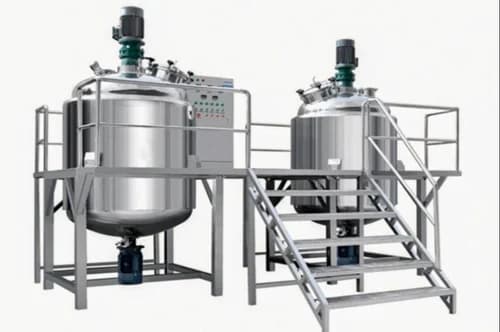
Custom Plant EngineeringShare your product, capacity and process requirement
Before you invest01 02 03 Browse all food processing articles →
Make a better-informed equipment decision
Practical guides for small production units, expanding food businesses and complete industrial plants.
Choose the right machine capacity
Turn daily demand into a realistic batch size and hourly output.
Read planning guideCompare plant quotations
Check equipment scope, utilities, installation and operating costs.
Read planning guideScale up mayonnaise production
Compare working batch sizes, mixing trials and filling requirements.
Read planning guide