Define what will go into the bottle
A request for a juice plant is incomplete until the intended drink is defined. A product extracted from fresh fruit, a nectar made with pulp, and a drink blended from purchased ingredients place different demands on preparation and mixing. List the fruits, ingredient format, texture and packaging before requesting machinery.
The fruit juice processing plant can then be discussed as a series of duties: preparation, extraction or pulping, formulation, treatment and packing. Write a separate brief for each product if the line will handle several recipes.
Choose extraction around the raw material
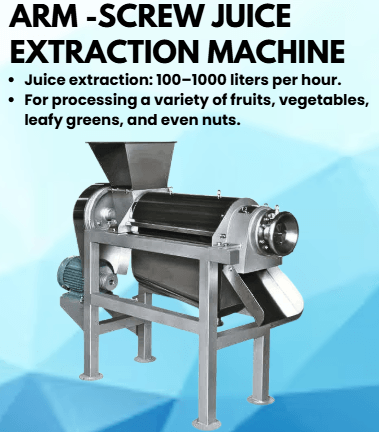
Ask suppliers to demonstrate the proposed extraction method using representative fruit, including normal size and ripeness variation. Compare a juice extractor with a fruit pulper according to the required output, rather than assuming the machines are interchangeable. Record juice or pulp recovery and the amount of coarse material in the sample.
Include washing, trimming, stone removal or cutting where the actual fruit requires it. For carrot-based products, review the carrot juice line and its feed preparation separately instead of applying a soft-fruit trial result to roots.
Put yield and capacity on the same basis
A machine accepting 300 kg of fruit per hour does not imply 300 litres of finished beverage per hour. First establish the measured extracted mass; then account for the agreed recipe and any subsequent losses. Where volume is used, state the density basis instead of treating kilograms and litres as identical.
For illustration only, 300 kg of fruit at an assumed 60% extraction recovery gives 180 kg of extracted product. Both the input rate and recovery must be replaced by actual trial results. This calculation says nothing about drink formulation, shelf life or equipment performance.
Match blending and packing to the schedule
Ask whether the blending vessel capacity means total volume or usable working volume. Document ingredient addition, mixing, transfer and cleaning time. If the extractor runs while a batch is being blended, identify where extracted product will wait and how that holding duty is managed.
A packaging brief should specify container material, fill quantity, closure and the number of accepted packs required per shift. Trial transfer and filling with the intended product texture. A successful water demonstration does not show how a drink containing pulp will behave at the same settings.
Separate machine acceptance from product validation
Agree the required treatment, cooling and packaging process with the specialist responsible for the beverage. Ask the equipment supplier to document which controls, instruments and recording functions are included in that scope. A filler or extractor purchase does not establish a validated shelf life.
- Trial fruit variety, condition and quantity.
- Recovered output, rejected material and sample texture.
- Complete blending cycle and transfer time.
- Accepted fills in each planned pack size.
- Cleaning access and recipe changeover procedure.
Send one consistent production brief
Include product definitions, daily volumes, fruit availability, seasonal peaks, packaging and utility information in the enquiry. Use the same brief for all quotations. Compare both preparation and downstream equipment with the quotation checklist, then discuss the juice line with AREIUM.
The FAO guide to establishing processing facilities provides background on how raw material and product type influence preparation and extraction. Confirm the final process against your own product specification.