Specify the product that leaves the line
A potato preparation line may produce washed potatoes, peeled potatoes, cubes or another cut. These are different scopes. State the finished form, size tolerance and daily accepted output before requesting a potato processing plant.
If the project will later include blanching, frying, freezing or packing, list those duties separately. A washing, peeling and cutting quotation should not be treated as a complete chips or frozen-fries factory unless those downstream stages are explicitly included.
Use representative potatoes in each trial
Document variety, size distribution, storage condition and incoming soil. Trial the material you expect to buy, not only a small collection of uniform potatoes. Use the proposed potato washer to assess soil removal and handling before measuring peeling performance.
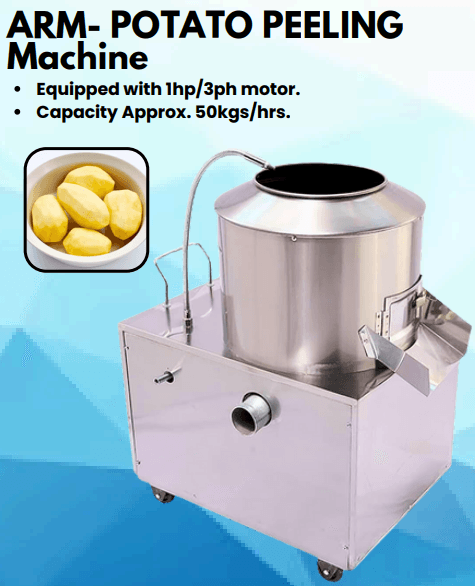
At the peeling stage, record the batch input, peeled output and any manual trimming still needed. Compare the accepted preparation standard as well as speed. A short cycle that leaves substantial manual work may not meet the production objective.
Calculate the combined yield through the line
For illustration, suppose 100 kg of washed potatoes yields 85 kg after peeling and trimming. If 95% of that mass becomes accepted cubes, the result is 85 multiplied by 0.95, or 80.75 kg. The accepted yield from the washed starting mass is therefore 80.75%, not 95%.
These assumed figures explain the calculation only. Replace them with measured trial results and account separately for losses before washing if raw receiving weight is the starting basis. Keep each stage on the same mass basis when comparing machines.
Inspect cuts and include rework
Trial the potato dicer with the required cube dimensions. Separate accepted pieces, irregular cuts and fines. If a portion needs another pass or manual sorting, include that effort in the operating schedule.
For a business handling other vegetables too, compare the general dicing and cubing machine against the full ingredient list. Ask which cutting sets are supplied and which are optional. Count changeover time when several sizes are produced in the same shift.
Balance the washer, peeler and cutter
A faster washer will not raise accepted cut output if peeling or sorting is the limiting stage. Time loading, processing and unloading at each machine, and identify where material waits. Compare a combined washer and peeler only after a trial confirms the intended preparation result.
- Raw potato specification and trial sample size.
- Washed, peeled and accepted cut masses.
- Remaining manual trimming and sorting.
- Complete cycle time at each stage.
- Operator and intermediate-container requirements.
- Cutting sets and cleaning access.
Request a line proposal with a clear acceptance basis
Send the target finished cut, accepted daily output and representative raw-material information to AREIUM. Request a scope that shows how the machines connect and which tasks remain manual.
Use the vegetable preparation planning guide to review the layout, and the factory trial checklist to agree measurements before ordering. That makes output comparisons more meaningful than a single advertised throughput number.