01
1. What is a Fruit Pulper Machine?
A fruit pulper machine is a food processing machine designed to extract pulp from fruits by separating the edible portion from seeds, peels, and fibers. It is widely used in juice processing plants, fruit pulp manufacturing units, and beverage production facilities. Many fruit processing businesses invest in a fruit pulper machine to process fruits such as mango, tomato, guava, papaya, and berries efficiently. Compared to manual pulp extraction, automated pulping machines significantly increase production speed and maintain consistent pulp quality.
02
2. Working Principle of a Fruit Pulper Machine
A fruit pulper machine works using a rotating blade or beater mechanism combined with a perforated sieve. Fruits are fed into the machine through a hopper where the rotating blades crush the fruit. The pulp passes through the mesh screen while seeds and fibers are separated and discharged from another outlet. This process allows efficient extraction of smooth fruit pulp that can be used in juice production, sauces, jams, and other processed food products.
03
3. Production Capacity of Fruit Pulper Machines
Fruit pulper machines are available in multiple capacities depending on the scale of production. Small commercial pulpers can process between 100 kg and 300 kg of fruit per hour, making them suitable for small juice businesses and restaurants. Medium-capacity machines handle around 500 kg to 1000 kg per hour and are commonly used in fruit pulp processing units. Large industrial fruit pulper machines used in processing plants can handle more than 2000 kg per hour, enabling continuous production for large-scale fruit processing operations.
04
4. Fruits Processed Using a Pulper Machine
Fruit pulper machines are designed to process a wide range of fruits. They are commonly used for mango pulp extraction, tomato pulping, guava pulp production, papaya processing, and berry pulping. These machines are essential equipment in fruit pulp manufacturing plants where large volumes of fruits must be processed quickly while maintaining product quality.
05
5. Applications in Food Processing Industry
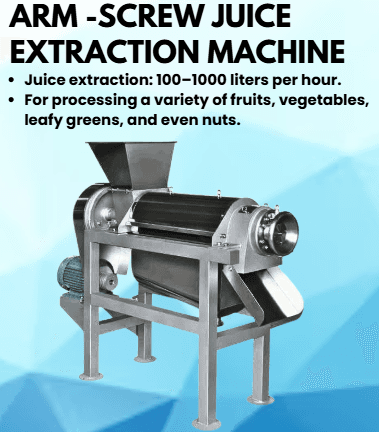
Fruit pulper machines are widely used in fruit juice manufacturing plants, sauce production units, pulp processing factories, and beverage industries. After pulping, the extracted fruit pulp is often processed further using juice extraction or concentration systems. Many processing units combine pulping with a juice extractor machine to produce fresh fruit juice or concentrate for commercial beverage production.
06
6. Fruit Pulper Machine Price in India
The price of a fruit pulper machine in India varies based on machine capacity, construction material, and automation level. Small fruit pulper machines suitable for small businesses generally cost between ₹60,000 and ₹1.5 lakh. Medium-capacity machines used in food processing units typically range from ₹2 lakh to ₹5 lakh. Large industrial fruit pulper machines used in continuous processing plants can cost ₹6 lakh or more depending on capacity and customization.
07
7. Features to Look for Before Buying
When selecting a fruit pulper machine, buyers should evaluate several key features such as stainless steel construction, efficient pulping mechanism, durable sieve screens, and easy cleaning design. Food-grade materials such as SS304 are important to maintain hygiene standards. Machines with interchangeable screens allow different pulp textures depending on the fruit being processed.
08
8. Benefits of Using an Industrial Fruit Pulper
Using an automatic fruit pulper machine offers several benefits for food processing businesses. It improves pulp extraction efficiency, reduces labor costs, and increases production capacity. Automated pulpers also provide consistent pulp quality, which is essential for producing uniform juices, sauces, and processed fruit products.
09
9. Choosing the Right Fruit Pulper Machine Manufacturer
Choosing a reliable machine manufacturer is important for long-term performance. Buyers should select manufacturers that provide durable stainless steel machines, technical support, and spare parts availability. A good supplier will also help determine the correct machine capacity based on the type of fruits processed and expected production output.