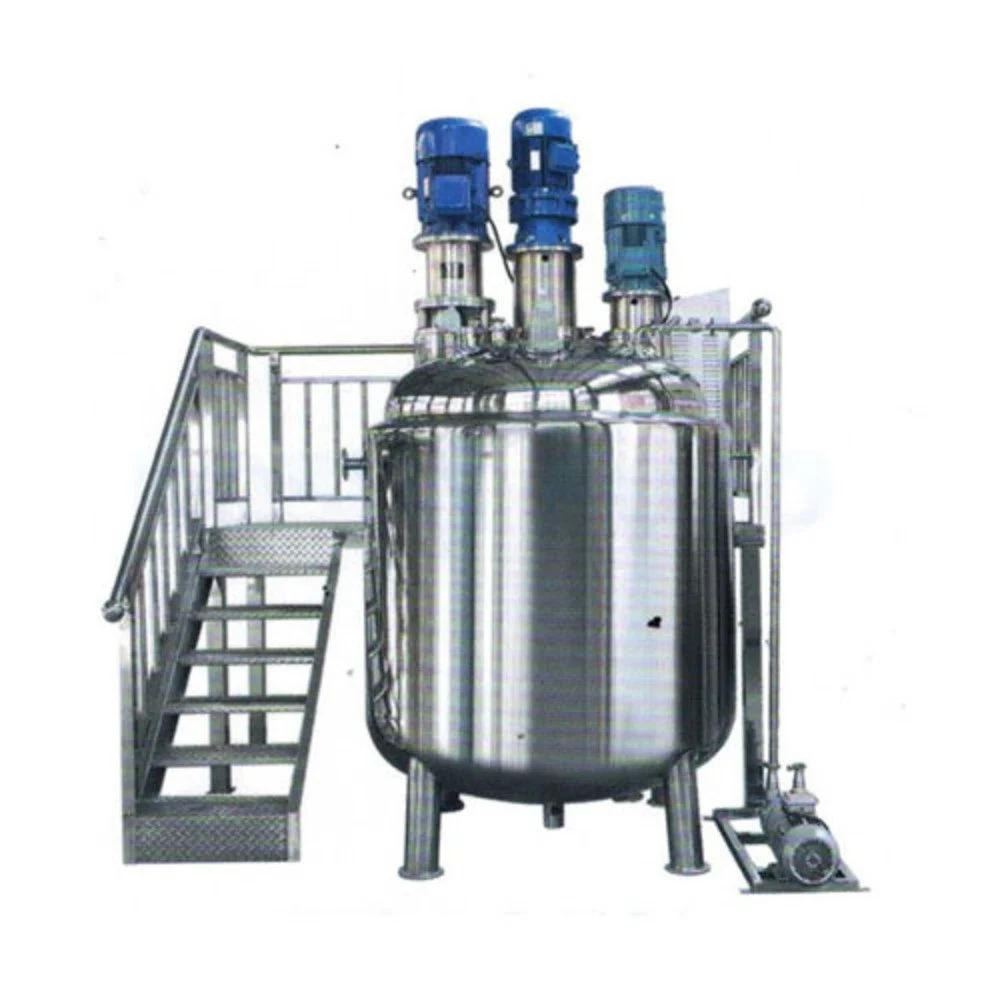
Understand the mixing duty
Mayonnaise production requires dispersing one liquid phase in another to create an emulsion. The mixer must also handle the addition and dispersion of other ingredients. Tetra Pak?s mixing handbook explains these distinct mixing duties and why ingredient characteristics affect the process.
Ask which stages the proposed machine performs, how additions are controlled and how the product circulates. Where vacuum is proposed, ask its purpose and what supporting equipment is included. Do not assume a mixer with a larger motor will reproduce an existing recipe without a process trial.
Distinguish vessel volume from working batch size
Ask for total vessel volume, recommended working volume and minimum practical batch size. Product mass depends on the actual formulation, so litres and kilograms should not be treated as interchangeable in a quotation.
Build the cycle around weighing, ingredient addition, mixing, discharge and cleaning. An illustrative 200 kg working batch with a complete two-hour cycle averages 100 kg per hour before unplanned delays. The example is a planning calculation, not an AREIUM performance claim. Use measured trial times for your final production schedule.
Plan transfer and filling with the mixer
A successful mixer trial is only part of a complete plant assessment. Specify how the product moves to the filler, the container sizes, required fill accuracy and closing method. Ask the supplier to demonstrate the transfer arrangement with a product representative of the proposed consistency.
Compare the complete mayonnaise making plant scope with a mixer-only quote. Clarify holding equipment, pumps, pipework, controls and cleaning responsibilities. The line output is limited by the practical performance of the connected stages.
Use a documented scale-up trial
Record the formulation version, working quantity, ingredient addition sequence, mixing settings, elapsed time and product temperature during the trial. Agree objective checks for the texture and consistency you want, and retain labelled samples for your product team?s evaluation.
Review cleaning and product changeover requirements, including any allergen handling needs. Have the finished product, packaging and storage process assessed for the intended shelf life. Neither a mixing machine nor a successful appearance check establishes a shelf-life claim.
Prepare a useful enquiry
- Recipe family and ingredient forms.
- Current and future daily production targets.
- Minimum and maximum required batches.
- Target texture, packaging sizes and filling speed.
- Available utilities, space and cleaning arrangements.
Read the plant quotation checklist before comparing proposals. Discuss your mayonnaise project with AREIUM and request a configuration whose working batch range, scope and trial conditions are stated clearly.