
Fruit Pulp Processing Plant in Mumbai for practical commercial output
A buyer in Mumbai usually starts with a production problem: low pulp yield, inconsistent fibre and messy manual transfer. The right fruit pulp line should reduce that problem instead of simply adding more equipment.
FMCG brands, cloud kitchens, HoReCa suppliers, exporters and packaged-food companies compare machinery through daily output, cleaning time, packing speed and the confidence that repeat batches will stay within range.
AREIUM can use this page to connect product quality with site readiness, manpower and after-sales support in the Mumbai market.
Applications and packing formats for Mumbai buyers
This setup can support bulk pulp packs, beverage ingredients, dairy inputs, bakery fillings and seasonal fruit processing, with configuration depending on recipe texture, output target, cleaning routine and shelf-life expectations.
Bulk suppliers often prioritize filling speed and cleaning ease; retail brands usually focus on appearance, consistency and pack finish.
The setup should be chosen for the buyer's operating model rather than copied from another enquiry.
Who should consider Fruit Pulp Processing Plant in Mumbai?
In Mumbai, the best-fit buyers are FMCG brands, cloud kitchens, HoReCa suppliers, exporters and packaged-food companies. Their purchase decision is shaped by premium packing, tight timelines, port-linked dispatch and urban space discipline.
The equipment should support mango pulp, guava pulp, tomato pulp, fruit puree and bulk pulp ingredients while reducing issues such as low pulp yield, inconsistent fibre and messy manual transfer.
AREIUM should use the enquiry stage to clarify capacity, recipe flow, manpower, packing style and support requirements.
- Primary users: FMCG brands, cloud kitchens, HoReCa suppliers, exporters and packaged-food companies
- Local buying angle: premium packing, tight timelines, port-linked dispatch and urban space discipline
- Products covered: mango pulp, guava pulp, tomato pulp, fruit puree and bulk pulp ingredients
- Control points: pulp yield, fibre level, seed separation, colour, flavour and clean transfer
Production flow designed for Mumbai site conditions
The process route should be planned before dispatch so material movement fits space-constrained units, fast dispatch and strict cleaning routines.
The project discussion should decide which support equipment is needed before the main machine is finalized.
Recipe and packaging may change the sequence, but the operator route should remain simple and repeatable.
- Fruit washing and sorting
- Destoning, peeling or preparation where required
- Pulping according to fruit texture
- Refining to control fibre and seed content
- Collection in sanitary vessels
- Heating or pasteurization where required
- Transfer to filling or storage
- Packing in bulk packs, cans or pouches
Quality priorities for mango pulp, guava pulp, tomato pulp, fruit puree and bulk pulp ingredients in Mumbai
The finished product should be judged by pulp yield, fibre level, seed separation, colour, flavour and clean transfer. They decide whether the product looks, tastes and performs consistently in the market.
The design should help the team clean, inspect and restart the line without confusion.
For Mumbai buyers, plant quality should be explained through workflow reliability and repeatability, not only through motor size or steel thickness.
Capacity, utilities and floor planning in Mumbai
Capacity should follow practical sales volume, manpower and filling speed. A compact setup can suit modest demand, but growing factories should plan transfer and packing integration.
A practical site audit covers gate access, machine footprint, utilities, drainage, operator paths, storage and dispatch handling.
Around Navi Mumbai, Thane, Vasai, Bhiwandi and Taloja belts, site conditions can differ strongly, so the quotation should be connected with the actual floor plan.
- Confirm daily output and peak-hour requirement before finalizing the pulp line.
- Match batch size with filling or packing speed for brand-led distribution.
- Check site conditions around Navi Mumbai, Thane, Vasai, Bhiwandi and Taloja belts if relevant.
- Keep cleaning, service and operator movement space open with the operator team in mind.
- Plan utilities before freezing the layout with the operator team in mind.
Business impact of choosing the right Fruit Pulp Processing Plant
ROI improves when preparation, processing, filling and cleaning become more predictable across daily production.
A planned fruit pulp processing plant gives supervisors a clearer routine from preparation to packing, which is important when production pressure increases.
A practical ROI check should compare labour time, wastage, cleaning time, dispatch delays and the profit possible from larger orders.
- Less dependence on manual correction for low pulp yield, inconsistent fibre and messy manual transfer
- Clearer production scheduling and supervision
- More repeatable product quality across batches
- Better packing readiness for retail, HoReCa or bulk supply
- Reduced downtime risk through planned support and training
Installation, training and service support in Mumbai
Delivery and commissioning can be discussed through Mumbai port links, JNPT connectivity, Eastern Express and Western Express routes depending on project location and machine configuration.
Dispatch planning should include entry route, lifting arrangement, floor readiness, utility location and machine positioning.
The team should be trained on operating sequence, cleaning steps, safety checks and basic upkeep.
Before requesting Fruit Pulp Processing Plant price in Mumbai
For an accurate quotation, share product type, output target, batch size, packing format, available area, utilities and automation preference.
These inputs help avoid a setup that looks correct on paper but creates problems in cleaning, movement or packing.
Before ordering, the buyer should also confirm installation sequence, commissioning scope, spare parts and AMC support.
- Product: mango pulp, guava pulp, tomato pulp, fruit puree and bulk pulp ingredients
- Required hourly or daily output
- Batch size and working hours
- Packing format and filling requirement
- Available area, power, water and drainage details
- Preferred automation level and installation timeline
FAQs about Fruit Pulp Processing Plant in Mumbai
Is Fruit Pulp Processing Plant suitable for Mumbai businesses? Yes. It is suitable for FMCG brands, cloud kitchens, HoReCa suppliers, exporters and packaged-food companies that need repeatable production of mango pulp, guava pulp, tomato pulp, fruit puree and bulk pulp ingredients.
What capacity should I choose? Choose capacity after checking production hours, batch volume, filling format, manpower and future orders.
Can AREIUM customize the plant? Yes. The setup can be customized around product texture, batch size, movement route and packing format.
How should I request a quotation? Provide recipe type, production target, pack size, floor space, power, water, drainage and commissioning expectation.
Fruit Pulp Processing Plant Specifications
| Capacity | Minimum: 100 kg per batch, Maximum: 5 ton per hour, Customizable: true |
|---|---|
| Automatic Grade | Semi-automatic, Automatic, Fully automatic |
| Operation Mode | Batch, Continuous, Hybrid |
| Material Of Construction | Product Contact Parts: Stainless Steel SS304, Stainless Steel SS316 where required, Non Contact Parts: Stainless Steel, Painted structural support where appropriate, Surface Finish: Food-compatible hygienic finish according to application |
| Processing Options | Single-stage pulping, Two-stage pulping and refining, Puree processing, Pasteurized pulp processing, Aseptic pulp processing, Multi-fruit processing |
| Heating Cooling Options | Electric heating, Steam heating, Hot-water heating, Plate heat exchanger, Tubular heat exchanger, Chilled-water cooling, Cooling tower water |
| Suitable For Voltage | 220V single phase for selected compact machines, 380V or 415V three phase, 440V three phase, Customized for destination-country supply |
| Control Options | Manual control, Digital speed and temperature control, PLC control, HMI recipe control, Load-cell ingredient dosing, Variable-frequency-drive control, Data logging where specified |
| Multi Production Line Use | true |
| Cleaning Options | Manual cleaning, Semi-automatic CIP, Automatic CIP |
| End Products | Mango pulp, Guava pulp, Tomato pulp, Papaya pulp, Mixed fruit pulp, Peach pulp, Apricot pulp, Banana puree, Berry puree, Pineapple pulp, Amla pulp, Fruit puree, Refined fruit pulp, Pasteurized fruit pulp, Aseptic fruit pulp |
| End Packaging | Glass bottles, PET bottles, HDPE bottles, Stand-up pouches, Spouted pouches, Cans, Aseptic bags, Bag-in-drum, Bag-in-box, Bulk containers |
| Utilities Required | Electrical power, Potable process water, Heating utility according to selected system, Compressed air for applicable automation, Cooling water or chilling system where required, Drainage and sanitation facilities |
| Customization Available | true |
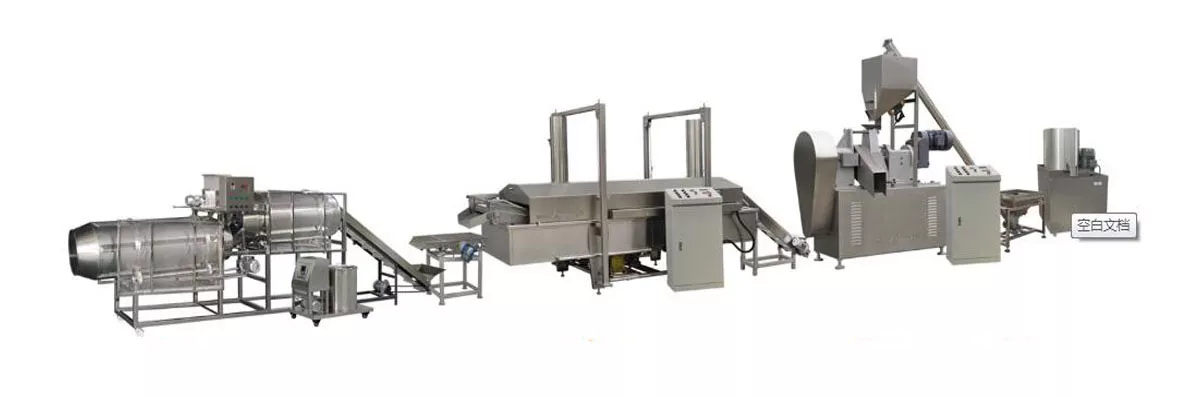
Fruit Pulp Processing Plant Variants & Models
| S.No. | Plant Variant | Capacity | Automation | Action |
|---|---|---|---|---|
| 1 | 100 kg Semi-Automatic Fruit Pulp Processing Plant | Approximately 100 kg per batch | Semi-automatic | Request Quote |
| 2 | 200 kg Semi-Automatic Fruit Pulp Processing Plant | Approximately 200 kg per batch | Semi-automatic | Request Quote |
| 3 | 500 kg Semi-Automatic Fruit Pulp Processing Plant | Approximately 500 kg per batch | Semi-automatic | Request Quote |
| 4 | 200 kg Automatic Fruit Pulp Processing Plant | Approximately 200 kg per batch | Automatic | Request Quote |
| 5 | 500 kg Automatic Fruit Pulp Processing Plant | Approximately 500 kg per batch | Automatic | Request Quote |
| 6 | 1000 kg Automatic Fruit Pulp Processing Plant | Approximately 1000 kg per batch or as configured | Automatic | Request Quote |
| 7 | 1 TPH Continuous Fruit Pulp Processing Line | Up to approximately 1 ton per hour | Fully automatic | Request Quote |
| 8 | 2 TPH Multi-Fruit Pulp Processing Line | Up to approximately 2 ton per hour | Fully automatic | Request Quote |
| 9 | 5 TPH Industrial Fruit Pulp Processing Plant | Up to approximately 5 ton per hour | Fully automatic turnkey line | Request Quote |
| 10 | Custom Aseptic Fruit Pulp Processing Plant | Custom | Automatic or fully automatic | Request Quote |
Why Choose AREIUM Food Machines?
Areium Food Machines designs and manufactures food-processing machinery and turnkey production plants for startups, fruit processors, exporters, farmer organizations and industrial food companies. For fruit pulp projects, Areium can support machinery selection, capacity planning, plant layout, processing equipment, retail or aseptic packaging integration, installation, commissioning and operator training.
- Turnkey fruit pulp plant supply
- Individual fruit-processing machines
- Capacity and equipment consultation
- Factory layout assistance
- Custom equipment design
- Retail, bulk and aseptic packaging integration
- Installation and commissioning
- Operator and staff training
- Spare-parts support
- Preventive-maintenance guidance
- Annual maintenance contracts where available
- Export packing and documentation support
Applications of Fruit Pulp Processing Plant
- Small-scale fruit pulp production
- Commercial fruit pulp manufacturing
- Mango pulp processing
- Guava pulp processing
- Papaya pulp processing
- Tomato pulp processing
- Mixed fruit pulp production
- Fruit puree manufacturing
- Juice and nectar ingredient production
- Jam and jelly ingredient production
- Dairy and ice-cream ingredient production
- Bakery and confectionery ingredient production
- Private-label fruit pulp manufacturing
- Retail pouch and bottle production
- Bulk fruit pulp supply
- Aseptic fruit pulp production
- Farmer and FPO fruit value addition
- Export-oriented fruit pulp processing
FAQs About Fruit Pulp Processing Plant in Mumbai
Is Fruit Pulp Processing Plant suitable for Mumbai businesses?
Yes. It is suitable for FMCG brands, cloud kitchens, HoReCa suppliers, exporters and packaged-food companies that need mango pulp, guava pulp, tomato pulp, fruit puree and bulk pulp ingredients with better hygiene, repeatability and output control.
What capacity of Fruit Pulp Processing Plant is suitable for Mumbai?
The correct capacity depends on daily output, batch size, packing format, utility readiness, manpower and expansion plan.
Can AREIUM customize Fruit Pulp Processing Plant for buyers in Mumbai?
Yes. AREIUM can customize layout, supporting machines, transfer route, filling support and automation level according to site and production requirements.
How should I request a quotation for Fruit Pulp Processing Plant in Mumbai?
Share product type, hourly or daily output, batch size, packing format, available area, power, water, drainage and installation timeline.
Which businesses in Mumbai should consider AREIUM food processing plants?
AREIUM plants are suitable for FMCG brands, exporters, hotels, cloud kitchens, corporate kitchens and packaged food companies, especially buyers who want to reduce manual work and improve batch consistency.
Can AREIUM support installation in Mumbai?
Yes. Installation and commissioning can be planned for Mumbai based on machine configuration, site readiness, logistics and project scope.
What should buyers in Mumbai check before requesting a quotation?
Buyers should share product type, daily capacity requirement, packaging format, available space, utility availability and automation expectations.
Get Fruit Pulp Processing Plant Price for Mumbai
Share your required capacity, product type, packaging format, automation level, available space, utilities and installation timeline. AREIUM can review the suitable fruit pulp processing plant configuration for your project.
Request Quote